


Third Place Winner
दिव्य अनुभूति – The Special Experience
Design by
Nandini Gera & Akriti Pathak
The concept of "LOSING YOUR SIGHT TO SEE ANEW" effectively emphasizes empathy and sensory engagement. The three levels of interaction, especially the experience spaces, provide a multi-sensory journey that aims to make visitors more empathetic towards the blind. The inclusion of tactile experiences, blind cricket with augmented reality, olfactory sense zones, and a stairs and road crossing simulation demonstrates a thoughtful approach to engaging various senses. The design concept is innovative, as it goes beyond a traditional museum setting. The idea of a blind experience museum, incorporating a dining experience in the dark, and the three levels of interaction showcase creativity. The inclusion of a variety of experiences, such as the tactile labyrinth and augmented reality cricket, adds a unique touch. The abstract eye-like void and the metaphorical representation of peripheral vision loss in the architecture contribute to the innovative design. The consideration of different types of visitors, including those who may only want to learn a little about blindness, those interested in dining in the dark, and the most adventurous ones looking for a full blind experience, demonstrates a commitment to accessibility and inclusivity. The choice of site near an institute for the blind Boys and Blind Girls hostel further emphasizes inclusivity. The design aims for a high aesthetic impact, with the cuboidal volume, abstract eye-like void, and the metal statue of an old blind man creating a visually striking entrance. The use of metaphors and the carefully crafted experiences contribute to an emotionally impactful journey. The integration of a monolithic concrete volume as an introspection space adds to the emotional depth of the experience. Overall, the design shows a commendable effort in creating an immersive and inclusive experience for visitors to gain a deeper understanding of blindness and foster empathy.
Nandini Gera & Akriti Pathak
Nandini Gera is currently a student at the Chandigarh College of Architecture. Nandini deeply appreciates and acknowledges the transformative power of architecture, allowing individuals to utilize their original ideas to make a substantial difference in the world. This inspires her to be more innovative and contemporary in her designs, with a focus on addressing the ever-increasing demands of the human race. She strongly believes that sustainability and minimal harm to the surrounding environment are crucial components of good architecture.
Akriti Pathak, currently navigating her fourth year in architecture at Chandigarh College of Architecture. Her journey has intricately woven together a love for mathematics and art, guiding her into the realm of architecture. Within this field, Akriti is propelled by a sincere passion for innovative design and a deep appreciation for the transformative influence of spaces. Currently immersed in the dynamic landscape of architectural education, she is earnestly developing a foundation in design principles, sustainable practices, and technical skills.


Celebrating Creativity & Vision
Winner’s Spotlight: An Exclusive Interview
Discover the story behind the victory — from concept to creation.
Please introduce yourself briefly and provide some insights into your background in design.
Nandini: Hi, my name is Nandini Gera. I'm a student of architecture at the Chandigarh College of Architecture, in Chandigarh. I’m currently in my fourth year. Design has always intrigued me because it involves a combination of the skills of problem solving, creativity and practicality . I love to read about architecture and design in general.
Akriti: Hello there, I'm Akriti Pathak, a passionate fourth-year architecture student at Chandigarh College of Architecture. Beyond my academic pursuits, I find joy in sketching, photography, indulging in movies and series, and continually expanding my proficiency in various design software. I am thrilled to share insights into our winning design for this competition.
Could you give us an overview of your winning experiential architecture design for The Blind Experience?
Akriti: To have long discussions, thinking, empathizing, researching was one of the most interesting time we spent together as team. It was definitely a fascinating design problem we have encountered till now.During the process of deciphering the project brief, we explored numerous ideas, some of which were abstract and involved intangibles. Through extensive discussions, we considered various approaches to transform these concepts into a tangible reality.
Nandini: The Design Concept that we eventually arrived at was: "Losing your sight to see anew".We saw the problem presented in the brief which was that people in general lack empathy towards individuals who are visually impaired and our concept was that we gradually take away the sense of sight from a visitor, who visits our museum and he becomes solely reliant on all his other senses for wayfinding throughout that museum. On evolving the concept further we figured out that we wanted to create such a space that when a person is journeying through that space externally, they are simultaneously going through a journey internally. A journey which will change their perception towards blind people and their inner worlds.
The competition focused on providing a unique sensorial experience of blindness. How does your design take into account the specific needs and aspirations of visually impaired individuals or communities
Nandini: About relevance to the blind experience, we wanted to break the misconceptions that sighted individuals have about blind people. We wanted to do this by making the architecture the part of a conversation; a dialogue between two completely distinct worlds. We did this by taking into account the daily challenges that a blind person might face. Like crossing the road, eating their food, identifying different smells, identifying different threats and even including the games that they can play. We included a simulation for how blind cricket is played. So all of these things give insight into what the blind person's world is actually like. And they realize it is much more vibrant and multifaceted than what they may have previously imagined. This is how our architecture becomes the part of a conversation between a sighted individual and a blind individual.
The competition emphasized sensory engagement. How did you incorporate elements that engage touch, sound, smell, and taste to create a rich and immersive experience?
Akriti: Regarding the building's design, our focus was on providing a comprehensive sensory experience for visitors to immerse them in the world of the blind. We envisioned three key components: a restaurant, a walk in gallery section, and third a full-on immersive experience in complete darkness.
Nandini: Since the brief emphasized on creating an immersive experience for all the senses other than sight, our restaurant offers the simple activity of eating, just in complete darkness. And this forces an individual to rely on all his other senses like taste, smell and touch.
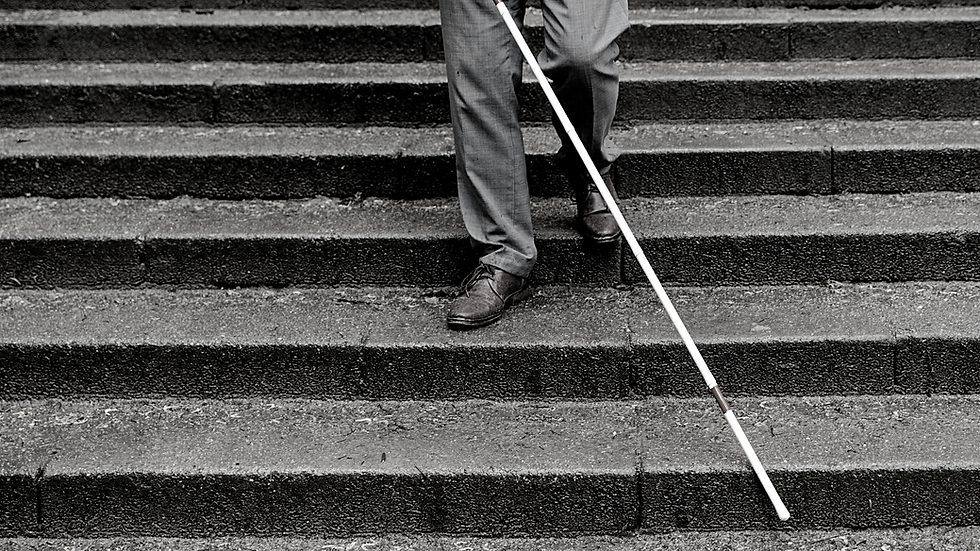
Akriti: The overall immersive experience encompasses various light and dark spaces, initiating with a maze where lights gradually dim, simulating the gradual loss of sight. Subsequent spaces embrace true darkness, featuring activities like watching films solely through audio to acclimate to the absence of sight. Another zone replicates everyday tasks, such as crossing roads or navigating stairs, with walls constructed from diverse materials emanating distinct scents, like the aroma of cinnamon. Different textures, including cotton, wool, or jute, mimic the feel of clothing, emphasizing reliance on touch and smell in understanding daily life materials, such as furniture. This multi-sensory approach aims to enhance empathy and awareness of the blind experience.
The design requirements include non-visual wayfinding strategies and adaptive technologies. How did you develop these strategies and integrate adaptive technologies to enhance the experience for both visually impaired and sighted visitors?
Akriti: In our navigation strategy, we implemented unique wayfinding techniques. Narrow corridors with textured surfaces were employed, aligning with the elongated plot and offering a chance to create a circulation system inspired by the Mobius strip. This innovative approach not only enhances spatial exploration but also aligns with the architectural concept, creating a dynamic and engaging experience for visitors.
The inspiration from the non-interrupting path of the Mobius strip led us to design a singular, continuous path for everyone to follow. This deliberate choice ensures a seamless and shared journey, fostering a unified experience for all visitors.
Sustainability is a key consideration in design. How did you incorporate sustainable and eco-friendly design principles into your experiential architecture?
Nandini: How we incorporated sustainability into our project was starting from the selection of the site itself. The site that we have selected is actually a very narrow plot of land. It was the old water tank for the waterworks department in Chandigarh. We visited that site. It is no longer in use and the waterworks have shifted to a new site.
We thought instead of disturbing a virgin piece of land with existing flora and fauna, we should use a site that was already disturbed for another purpose which it now no longer serves. Therefore we can use it to creatively challenge ourselves to design in a narrow space a blind experience museum.
The cherry on top was across the road from that site we have one side the Institute for the blind boys and on the other side we have the Hostel for the blind girls. So a visitor can also in a single trip go to these two places, thereby maximising it's impact.
Akriti: In our commitment to sustainability, we employed terracotta baguettes as the element for outer screen in our design.To create a skin around the building was actually a metaphor expressed spatially, we were trying to convey that a blind person’s world is multifaceted and diverse on the inside, but that can’t be known from afar. These terracotta baguettes forming the outer screen other than expressing that idea, also shade the building from the harsh summer sun. Terracotta's natural properties align with our eco-conscious approach, showcasing that aesthetic and environmental considerations can coexist seamlessly in architectural choices.
Experiential designs often have a profound impact on individuals and communities. How do you envision your winning design positively impacting individuals or communities and raising awareness about the challenges faced by visually impaired individuals?
Akriti: Our design is crafted to have a transformative impact on individuals and communities by fostering empathy and awareness about the challenges faced by visually impaired individuals. Through the immersive experiences within the blind museum, visitors are not merely observers but active participants in a journey that simulates the daily life of the blind.
By incorporating various sensory elements, such as the color-blind section, the maze symbolizing the gradual loss of sight, and the textured wayfinding inspired by a loop, our design aims to sensitize people to the unique perspectives and struggles of the visually impaired. The singular, non-interrupting path ensures a shared experience, fostering a sense of community and understanding.
Winning The Blind Experience Design Competition is a significant achievement. How does it feel to be recognized for your outstanding work?
Akriti: Winning The Blind Experience Design Competition is truly surreal and immensely gratifying. The recognition for our outstanding work comes as a delightful surprise, sparking a mix of joy, pride, and a profound sense of accomplishment. It validates the dedication and creativity poured into the project, and the realization that our design stood out among the submissions is both humbling and exhilarating. This achievement not only acknowledges our team's efforts but also fuels our passion for creating meaningful and impactful designs. It's a moment of validation and motivation, inspiring us to continue pushing boundaries in the field of experiential design.
Nandini: In the duration we worked on this competition, we really gave it our all. This time we were happy with our entry and also somewhat hopeful that we could make it to the top few entries.
Share this design journey
Spread inspiration and connect with innovative design perspectives


